 When Golden Valley Memorial Healthcare (GVMH) set out to modernize their resuscitation documentation, hospital leadership knew success wouldn’t come from technology alone; it would require a fundamental shift in behavior.
By pairing sustained education with a firm deadline to go paperless, GVMH has achieved rapid adoption of the Redivus Health resuscitation platform and transformed how their team responds during cardiac arrest events.
A Commitment to Change
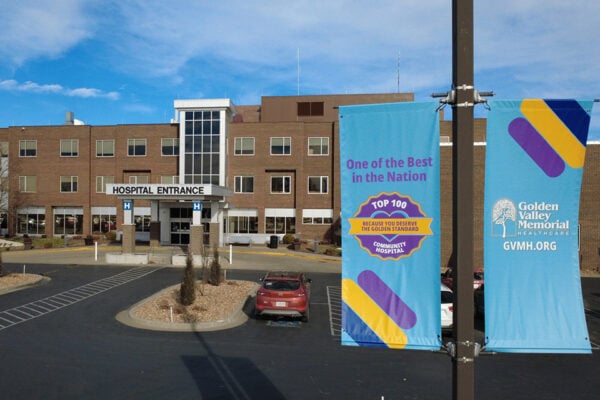
Golden Valley Memorial Healthcare in Clinton, MO
Golden Valley Memorial Healthcare is a leading nonprofit healthcare organization serving west-central Missouri with a full spectrum of primary and specialty care services.
Previously, GVMH’s resuscitation documentation process was paper-based and fragmented, often captured on whatever was available at the moment. The intense, time-sensitive nature of a cardiac arrest event leads large and small healthcare organizations to report “documenting on hands, gloves, paper towels, napkins.”
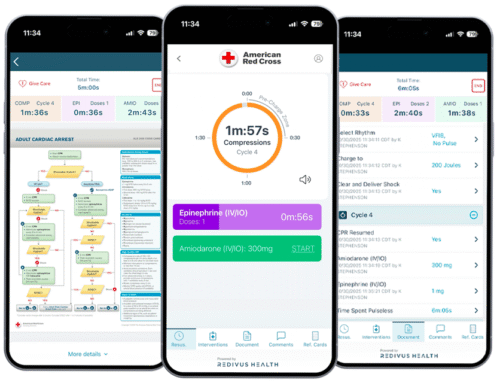
The GVMH Innovation Committee selected the Redivus Health digital platform to assist staff with high-risk, low-volume cardiac arrest events. Redivus software provides prompts for running codes according to advanced life support guidelines and automatically documents every intervention taken by the team providing life-saving care.
GVMH leadership moved quickly from a summer approval, to training and soft launch in October 2025, to a decisive deadline: As of January 2026, all code blue documentation had to be completed in Redivus. Paper was no longer an option.
That clarity made all the difference.
“Our approach of ‘this isn’t a choice’ is what has made adoption successful,” said Julie Balke, director of education.
Training Built for Real-World Situations
GVMH reinforced this shift with training designed for how clinicians actually work. Unannounced mock codes across all departments – from the ICU to the Birthing Center – required staff to use Redivus in real time, helping build confidence.
As familiarity grew, so did trust: “The more we use it, the more comfortable we are with it,” explained Earlene Pipes, executive director of nursing services.
Training on Redivus software isn’t a one-time event; it is embedded into everyday workflows:
- Onboarding for all new staff
- Computer-based learning and ALS/ACLS training sessions
- Scenario reviews and ongoing support
Education leaders also provide hands-on coaching and follow-up. When gaps appear, they address them directly, helping staff improve in real time. This continuous loop of training and reinforcement ensures consistent use across the organization.
Pivoting the Workflow for Success
Initially, GVMH trained charge nurses and house supervisors to become “super users” of the Redivus app. However, leadership soon realized these highly skilled people were needed to actively run the code and work on the patient, rather than handle the scribe responsibilities that Redivus seamlessly facilitates.
The team pivoted, training frontline staff to run the app and document the code while the more experienced clinicians focused on hands-on patient care.
With clear roles, Redivus has become a trusted support tool during codes. Frontline staff now turn to Redivus in the earliest moments of response, during the critical moments before a hospitalist or an ED physician arrives on the floor. The app’s built-in timers provide vital prompts for next steps, such as when to administer epinephrine and perform shocks when indicated.
The Impact: Confidence, Efficiency and Better Data
With strong adoption of Redivus in place, GVMH is already seeing meaningful results:
- Real-time documentation has eliminated 1-2 hours of post-code paperwork per event.
- Staff report increased confidence during codes, supported by built-in prompts and timers.
- Leadership now has immediate access to analytics, enabling data-driven education and performance improvement.
Perhaps most importantly, the organization has built a foundation for continuous improvement. They are using data from Redivus to refine training, improve compliance, and strengthen outcomes over time.
One GVMH nurse captured the impact best:
“What else do I need to do? Usually I’m doing paperwork for 1 to 2 hours after a code. I can’t believe the amount of time this saves.”
A Replicable Model for Change
GVMH’s experience with implementing Redivus offers a clear takeaway for other hospitals: Adoption happens with clarity, consistency, and accountability.
A firm paperless mandate set the expectation. Ongoing, real-world training made it achievable. And leadership follow-through made it stick. This model goes beyond better documentation. It enables a more confident, data-driven approach to managing the most time-critical events.